
Hypervigilance Questionnaire
A 20-question self-assessment to help you see how childhood trauma shows up as hypervigilance — and whether you tend to scan yourself, others, or both.
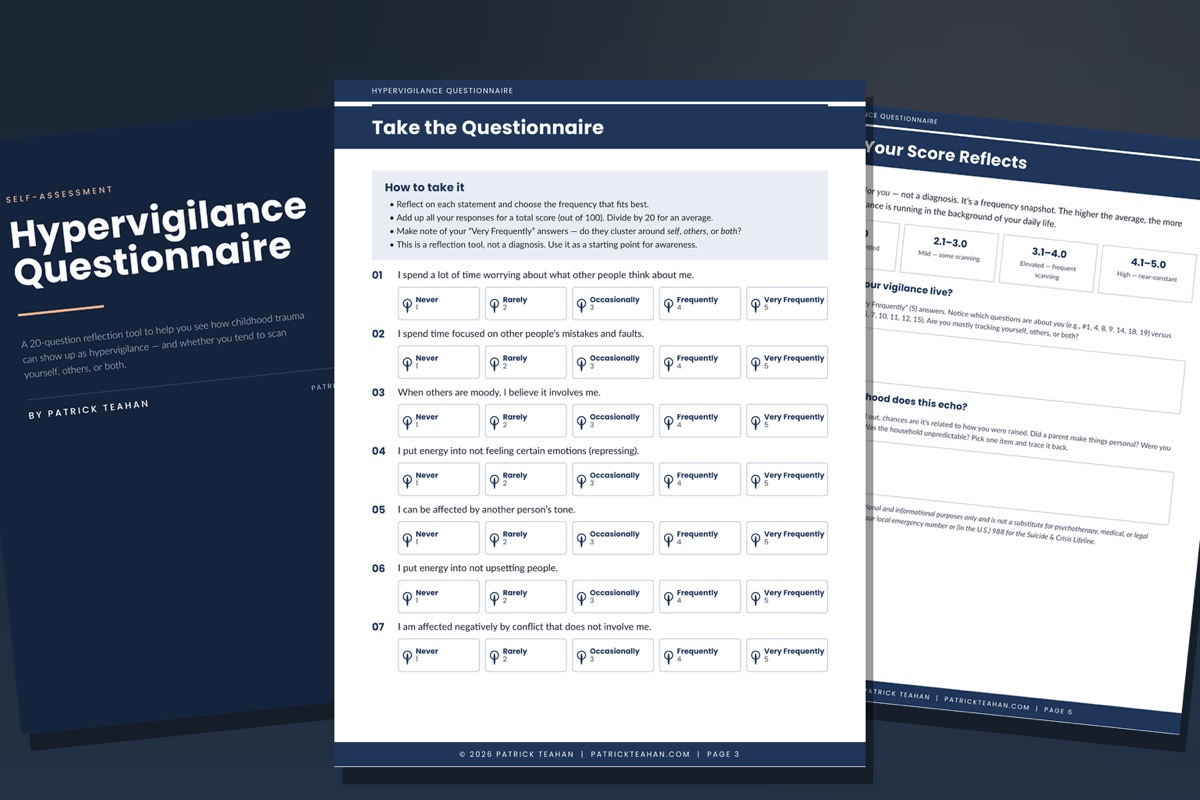
Most definitions of hypervigilance picture someone fresh from combat or assault, scanning their environment for threats. But for those of us who grew up in a toxic family system, hypervigilance often runs quietly in the background at baseline — a constant, exhausting effort to confirm beliefs about ourselves and the people around us.
It can look like assuming a partner's bad mood is your fault, reading an email from your boss as bad news before you've even opened it, worrying how you came across in a conversation, or staying tuned in to everyone else's feelings so nothing catches you off guard. The inner child is doing the scanning — and unlike a phone retrieving data cleanly, it tends to get the signal wrong, filtering everything through old beliefs about being unsafe, unlovable, or in trouble.
This 20-question questionnaire helps you take an honest look at those patterns. Rate each statement on a 1–5 scale (Never to Very Frequently) and add up your responses; dividing by twenty gives you an average. Pay special attention to the "Very Frequently" answers — they tend to point to where your vigilance lives. Hypervigilance generally falls into three categories: about self (do I cause others' feelings? did I make a mistake? am I coming across wrong?), about others (are they upset with me? are they trustworthy? do they like me?), or a combination of both — which is most common.
The goal isn't a diagnosis. It's awareness. If a question jumps out at you, it's likely connected to how you were raised — and that's exactly the thread worth following, on your own or with a therapist.
Enter your email for free access to the questionnaire.
This video is part of the following playlists...
This video is featured in...

Subscribe to the recovery newsletter loved by 1000s of survivors


Would you like to hear from Patrick and get help?
Get free inspiration and education, delivered weekly to your inbox.
