
Childhood PTSD Questionnaire
A 60-question self-assessment to help you see how childhood family dysfunction may be showing up in your present life — including the “tricky family” cases that don’t register on standard ACE scoring.
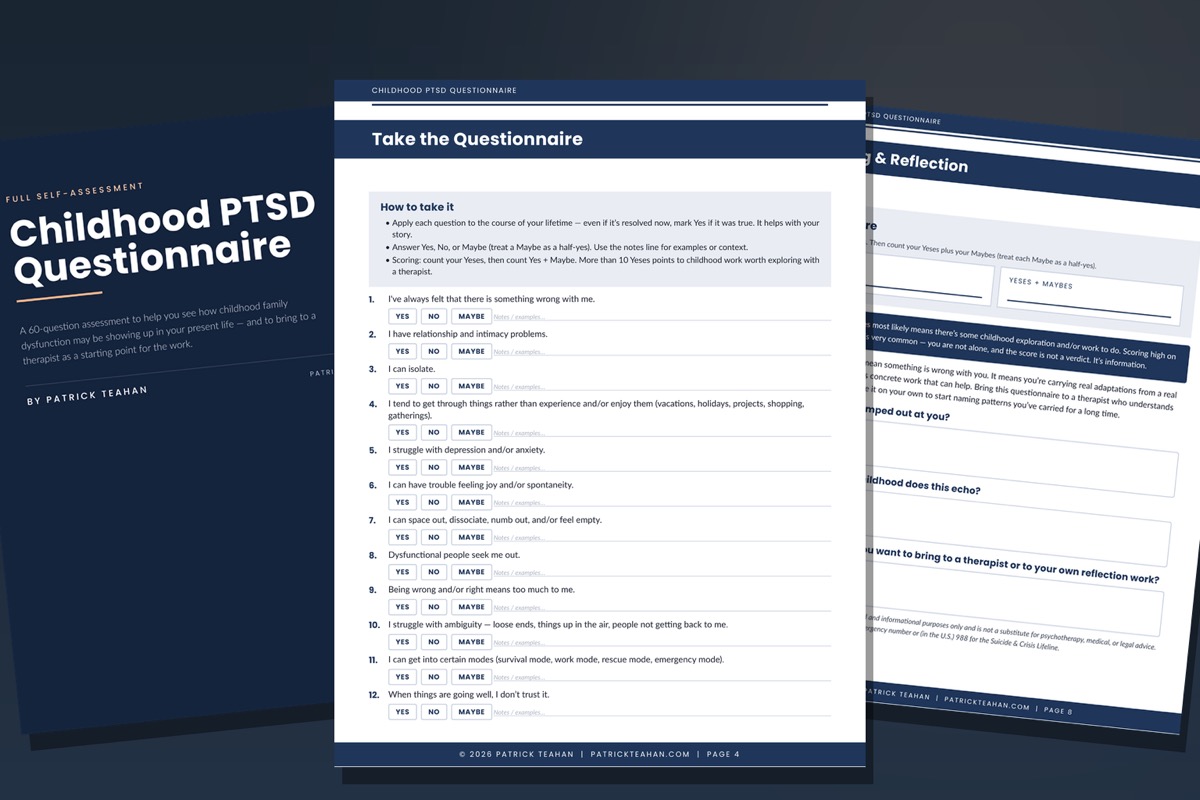
When we look back on our childhoods and ask “was it really that bad?” we often compare ourselves to extremes — and miss what actually shaped us. The CDC-Kaiser ACE study is invaluable, but its questions tend to capture only the most severe cases. Many people with low ACE scores still carry real childhood PTSD: intimacy problems, low self-esteem, depression, anxiety, addictions, perfectionism, hypervigilance — symptoms that don’t go away on their own.
This 60-question questionnaire is designed to catch what the ACE often misses: the tricky family. The household that looked normal on paper — food, education, housing, things basically working — but was deceivingly emotionally dysfunctional underneath. An emotionally shut-down parent. A neurotic, depressed, or untreated-trauma parent. Major elephants in the room. Toxic intimacy between caregivers. A child whose feelings were never made room for.
For each question, you mark Yes, No, or Maybe (treat a Maybe as a half-yes), and there’s a notes line for examples. Apply each question to the course of your lifetime — even resolved issues count, because they’re part of your story. Count your Yeses at the end. More than 10 points to childhood work worth exploring with a therapist. Scoring high on this questionnaire is very common — the score isn’t a verdict, it’s information.
Use it on your own to start naming patterns you’ve carried for a long time, or bring it into therapy as a starting point with someone who understands childhood PTSD.
Download the free questionnaire
A printable, fillable PDF with all 60 questions, scoring guide, and reflection prompts. Drop your email below to get it.
This video is part of the following playlists...
This video is featured in...
Want to go deeper?
Referenced videos
Playlist
This article relates to...
Subscribe to the recovery newsletter loved by 1000s of survivors


Would you like to hear from Patrick and get help?
Get free inspiration and education, delivered weekly to your inbox.
