
Our new research paper: validating the CPTSD-DSO scale
A new paper co-authored by Patrick Teahan and Stephen Foster, published in the Journal of Affective Disorders, validates a 38-item CPTSD-DSO scale — a tool for measuring the side of complex PTSD that standard PTSD screens often miss.
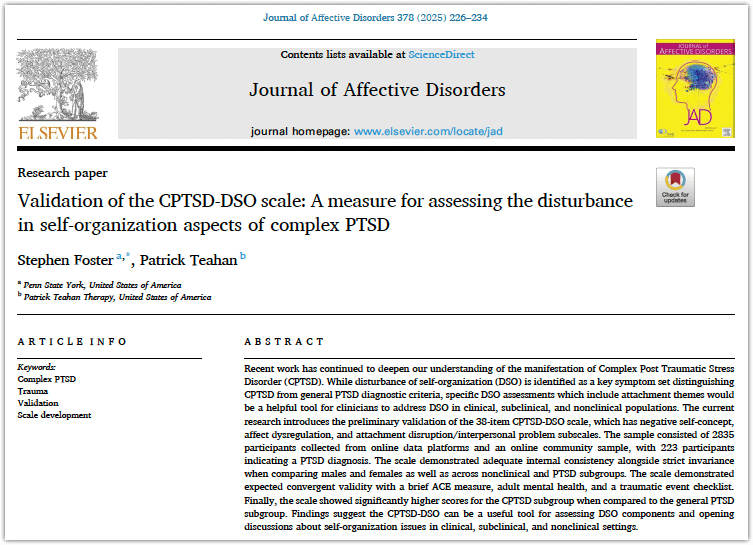
I'm excited to share something close to my heart. A new research paper I co-authored with Stephen Foster was recently published in the Journal of Affective Disorders.
In plain language: we validated a 38-item CPTSD-DSO scale that helps name and measure the part of CPTSD that often gets missed in standard PTSD screens—the disturbance in self-organization (DSO).
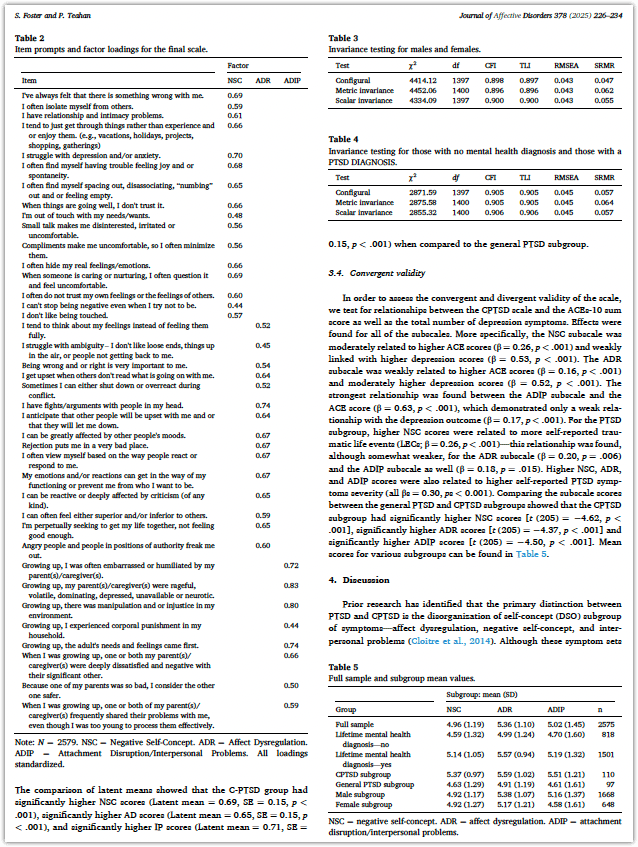
The paper appears in the Journal of Affective Disorders, vol. 378, June 1, 2025 (DOI: 10.1016/j.jad.2025.02.111). A few screenshots of the published paper are included below.
How we got here
Seven years ago I posted a video on YouTube called Was I Abused? Childhood PTSD Info and Questionnaire. Some of you were there from the start and even filled out the early surveys. Here's the original video.
Back then I was trying to solve a simple but painful problem: many people did not see themselves in the usual PTSD frameworks. They were still struggling with shame, big swings in emotion, and relationship patterns that would not budge.
The Adverse Childhood Experiences (ACE) study helped start the conversation by linking early adversity to long-term health and emotional challenges, but it often missed what was happening inside the self and inside attachment.
Those early questionnaires showed the same themes over and over:
- Negative self-beliefs
- Difficulty regulating feelings
- Painful attachment dynamics—even in "tricky" families that looked fine from the outside
I kept refining the questions, testing language with clients and community members, and comparing what we were seeing with clinical constructs. That work eventually reached an important milestone and became a proper research paper.
Thank you to everyone who watched, commented, and took those early questionnaires. Your participation helped shape a tool that can make treatment more targeted and hopeful.
What the CPTSD-DSO scale shows
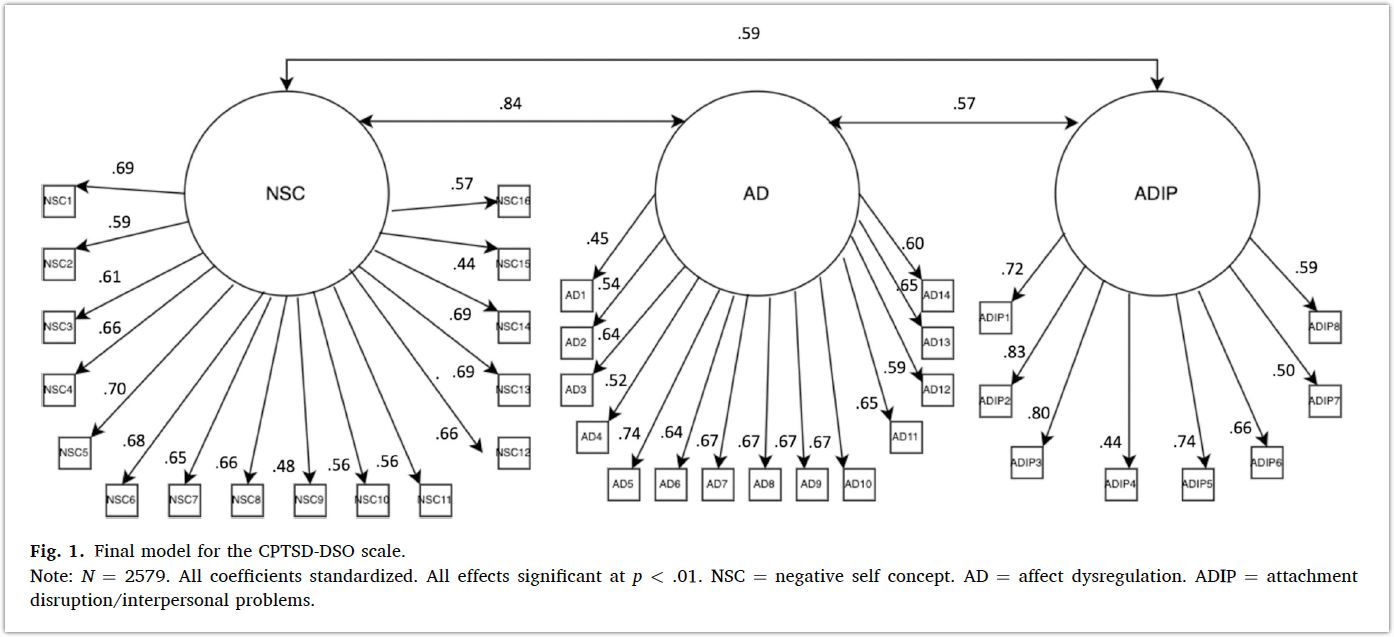
- What it captures: Three core DSO areas that make CPTSD feel so stubborn—negative self-concept, affect dysregulation, and attachment/relationship disruption.
- Why it's credible: We tested it with 2,835 participants across community and clinical samples. The structure held steady across men and women, and across people with and without PTSD. People with CPTSD scored higher than those with general PTSD—exactly what you'd expect if the tool is doing its job.
- Why it matters to you: If you've ever thought, "Why am I still stuck even after doing trauma work?"—this gives language and direction for the hidden work underneath.
With care,
— Patrick
This video is part of the following playlists...
This video is featured in...

Subscribe to the recovery newsletter loved by 1000s of survivors


Would you like to hear from Patrick and get help?
Get free inspiration and education, delivered weekly to your inbox.
