
1-2-3 Process Worksheet
A three-step intimacy tool from Amanda Curtin, LICSW, for when you or someone close to you gets triggered — turning conflict into a chance for real connection instead of the same old fight.
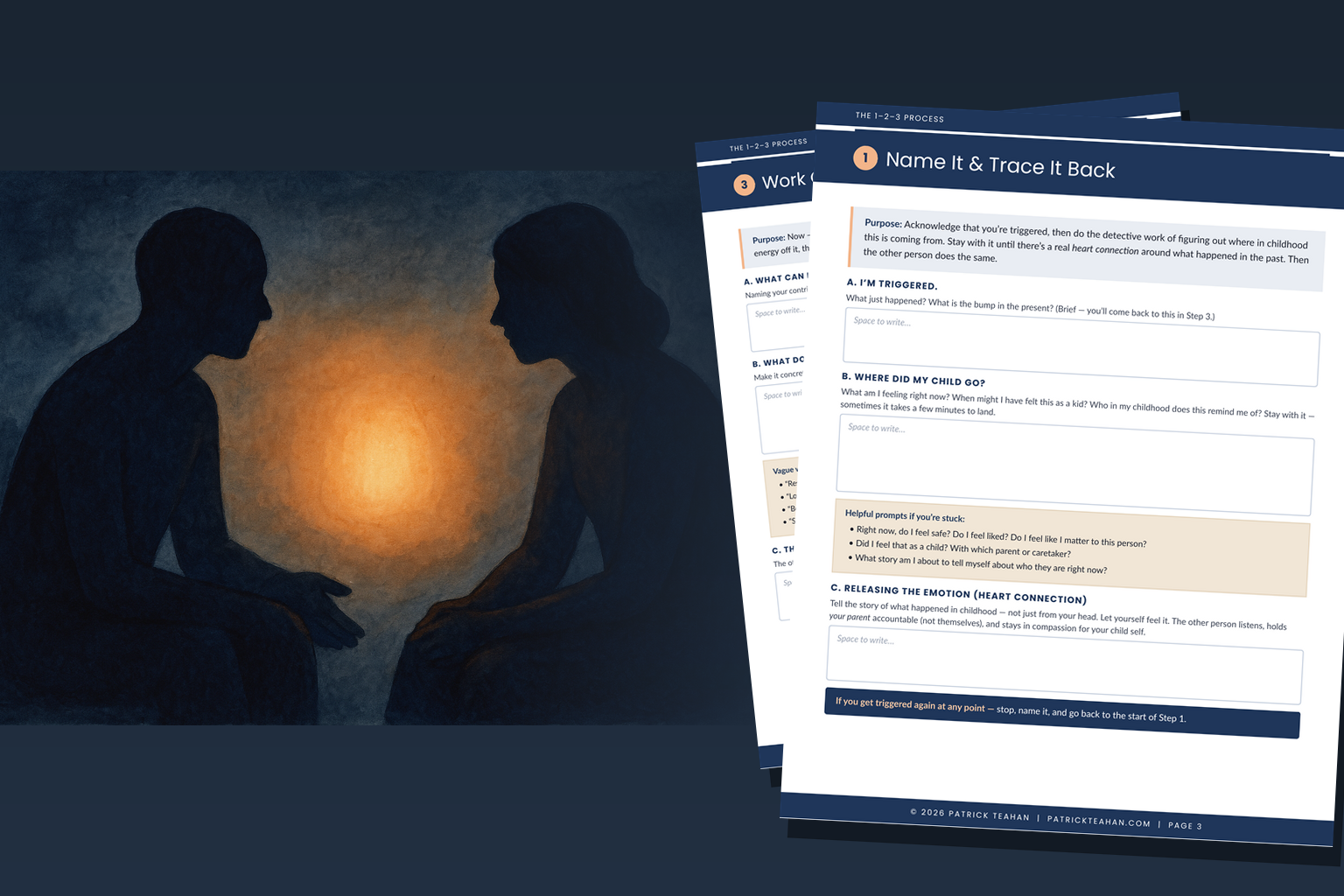
Most couples and close relationships fall into one of three patterns when conflict hits: the same fight on repeat, parallel lives where nothing real gets said, or eventually breaking up. The 1-2-3 Process — developed by Amanda Curtin, LICSW — interrupts that pattern. It's a structured way to move from being triggered (numb, reactive, righteous, or shut down) back into a heart connection with the person in front of you.
It works because most adult conflict isn't really about the bump in the present. It's about the bump hitting an old, unresolved wound — what Amanda calls the well of pain — and pulling the inner child into a fight the adult thinks they're having. The 1-2-3 gives the adult self a way to step back in.
Step 1: Name that you're triggered, and trace it back. Together, you do the detective work of figuring out where in childhood this is coming from. The other person listens and holds the original parent accountable — not the partner. You stay with it until there's a real heart connection around what happened in the past. Then you switch.
Step 2: Distinguish the present from the past. Each person names — concretely — how their partner is different from the parent the child got triggered to. They're sitting here doing this work. You're an adult now, not a powerless child. This is where projection softens and reality testing comes back.
Step 3: Work out the present bump. Now — and only now — you talk about the actual present issue. What can you own about your part? What do you specifically need? Asks have to be concrete ("return my texts within the day") rather than vague ("respect me"). You take turns until you both feel closer.
If either person gets triggered again, you go back to Step 1.
Amanda originally called this a conflict resolution tool. She now calls it an intimacy tool — because what people discover, doing it, is that they come out the other side knowing themselves and their partner more deeply than the fight ever would have allowed.
Download the free worksheet
A printable, fillable PDF with a page for each step — prompts, examples, and space to write through the process together (or on your own). Drop your email below to get it.
This video is part of the following playlists...
This video is featured in...
Want to go deeper?
Referenced videos
Playlist
This article relates to...
Subscribe to the recovery newsletter loved by 1000s of survivors


Would you like to hear from Patrick and get help?
Get free inspiration and education, delivered weekly to your inbox.
